Commercial Bounce House vs. Residential: What’s the Difference?
Choosing between a commercial bounce house and a residential bounce house depends on how often it will be used, who will use it, and where it will operate. Although both types provide inflatable entertainment for children, they are designed for different purposes. For party rental businesses, event companies, and commercial buyers, understanding these differences is essential before investing in inflatable equipment.
1. Commercial vs. Residential Bounce House: Main Differences
The biggest difference between commercial and residential bounce houses is their intended frequency and intensity of use. Residential bounce houses are generally designed for occasional family entertainment, such as backyard birthday parties. Commercial bounce houses are built for more frequent operation in rental businesses, events, and other professional settings.
Commercial models typically feature stronger construction, reinforced stress points, and designs intended to handle repeated setup, takedown, transportation, and use. Residential models usually prioritize affordability, portability, and convenience for homeowners.
If you plan to rent out inflatables or operate them at public events, a residential model may not be suitable for your business requirements.
2. Material and Construction: Heavy-Duty vs. Home Use
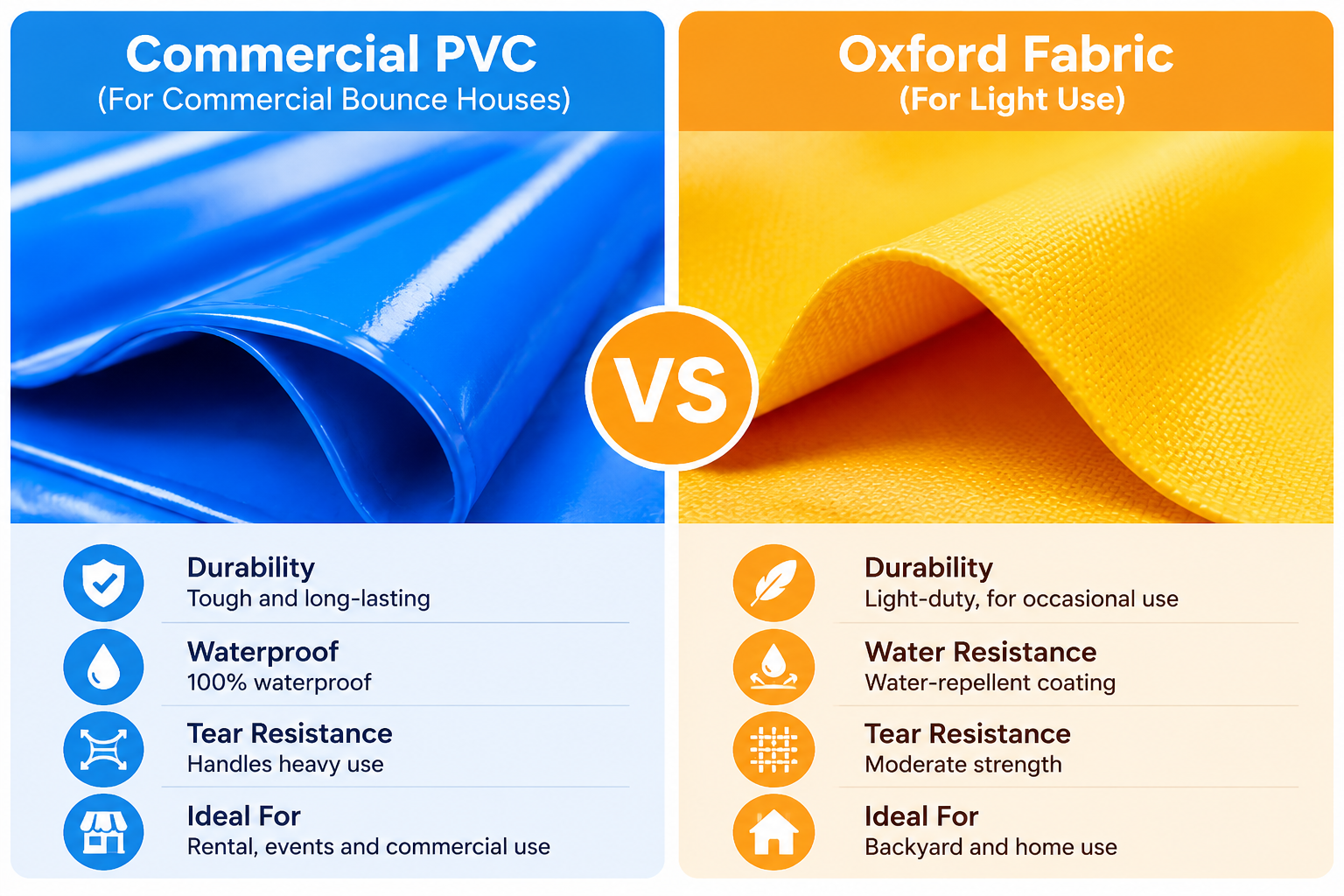
Material quality and construction are important factors when comparing commercial and residential bounce houses. Commercial inflatables commonly use commercial-grade PVC tarpaulin, with fabric specifications selected according to the product design and intended application.
They may also feature reinforced seams, stronger anchor points, and additional reinforcement in high-stress areas. These construction details help support repeated use and reduce the risk of premature wear.
Residential bounce houses may use lighter materials, including lighter PVC or polyester fabrics, depending on the product. These materials can be appropriate for occasional home use but may not provide the same durability under frequent commercial operation.
When evaluating a heavy-duty bounce house, buyers should check fabric specifications, seam construction, reinforcement, anchoring systems, and manufacturer recommendations rather than judging quality by appearance alone.
3. Durability and Expected Lifespan
Commercial bounce houses are generally designed for a more demanding operating schedule than residential inflatables. However, neither type has a guaranteed lifespan because durability depends on material quality, usage frequency, maintenance, storage, and operating conditions.
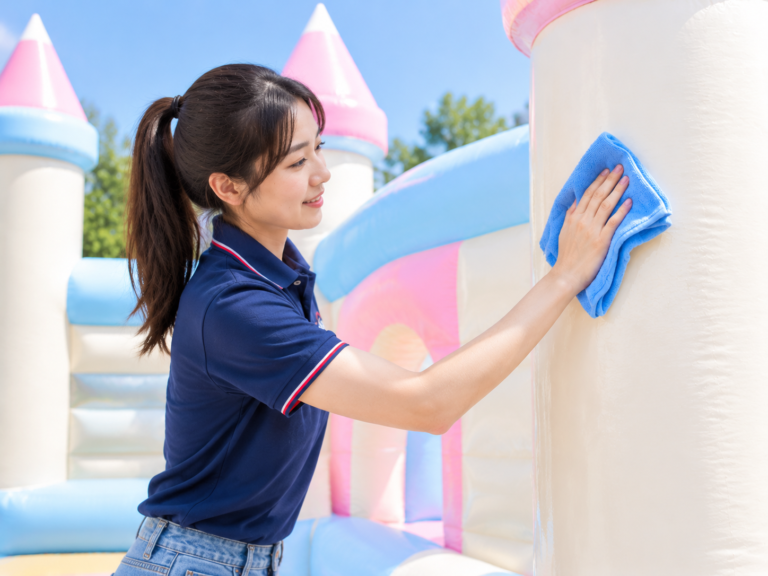
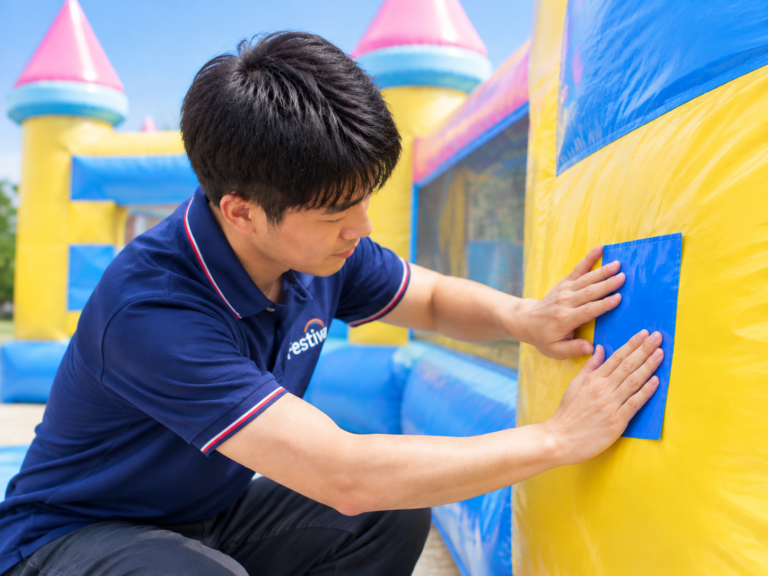
Rental companies should inspect their equipment regularly, clean it after use, dry it completely before storage, and repair small areas of damage promptly. Proper setup and operation also help prevent unnecessary stress on seams and connection points.
A well-maintained commercial bounce house can be a long-term business asset. For professional buyers, the initial purchase price should therefore be considered alongside expected maintenance costs and potential rental revenue.
4. Size, Design, and Customization Options
Commercial bounce houses often offer more choices in size, layout, and customization than typical residential models. Rental businesses may need different designs to serve birthday parties, school events, festivals, and corporate activities.
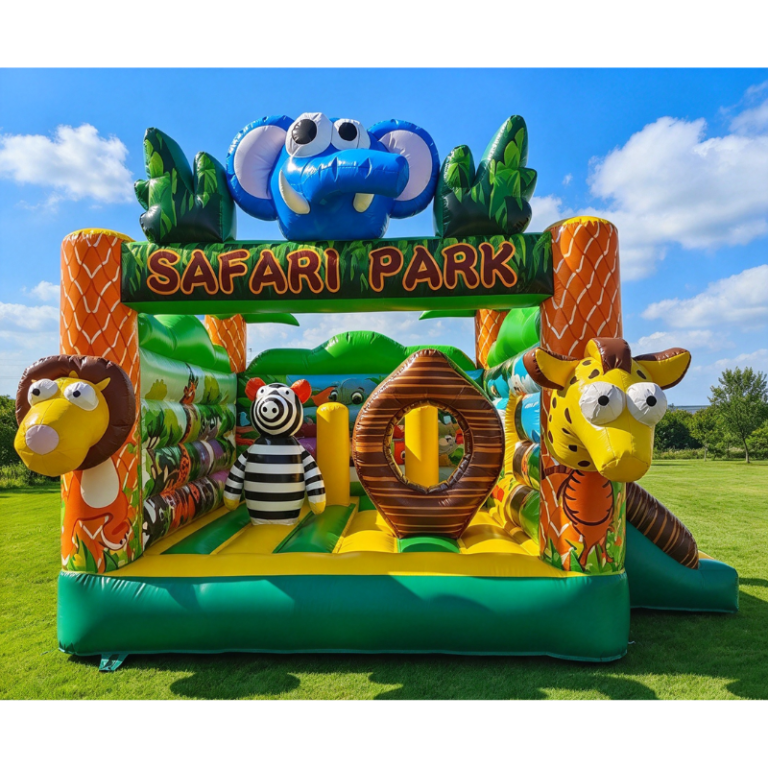
Available options can include standard bounce houses, themed inflatable castles, bounce house combos with slides, and larger commercial inflatable play structures. Businesses can also request custom colors, artwork, dimensions, and branding to match their target customers.
Residential inflatables tend to focus on compact designs that fit into home gardens and are easier for families to handle. Before choosing a commercial model, buyers should consider transportation, storage space, installation requirements, and the types of events they serve.
5. Which Bounce House Is Better for a Rental Business?
A commercial bounce house is usually the better choice for a party rental business because it is designed around professional operating needs. Rental operators need equipment that can withstand repeated handling, transportation, installation, and customer use.
Residential bounce houses may cost less initially, but using equipment outside its intended operating conditions can create durability and safety concerns. Buyers should also check applicable local regulations, insurance requirements, product documentation, and manufacturer operating instructions before offering inflatables for public or rental use.
For businesses building their first inventory, it is often sensible to start with versatile commercial bounce houses and add themed designs or slide combos as customer demand becomes clearer.
6. What Should You Check Before Buying a Commercial Bounce House?
Before purchasing a commercial bounce house, compare more than just the price and appearance. Ask the manufacturer about material specifications, reinforced construction, available sizes, blower requirements, anchoring systems, maintenance instructions, and quality inspection procedures.
It is also important to confirm customization options, production lead times, shipping arrangements, and after-sales support. Working with an experienced inflatable manufacturer can help rental companies and distributors select products that match their operating needs.
Final Thoughts
Commercial and residential bounce houses serve different markets, and the right choice depends on the intended use. For homeowners planning occasional backyard entertainment, a residential inflatable may be sufficient. For rental companies, event organizers, and professional buyers, a commercial-grade bounce house is generally the more appropriate investment.
Choosing the right materials, construction, design, and manufacturer can help build a reliable inflatable inventory and support long-term business growth.
\ Get the latest news /