How to Repair a Bounce House: Common Problems and Solutions
A bounce house is designed for repeated use, but frequent operation, outdoor exposure, and improper handling can eventually cause damage. Small problems such as air leaks, loose seams, damaged zippers, and worn-out surfaces can affect performance and may become serious safety risks if ignored.
Knowing how to repair a bounce house can help rental businesses reduce downtime, protect their investment, and extend the lifespan of their inflatable equipment.
In this guide, we’ll cover common inflatable bounce house problems, practical repair methods, and maintenance tips to help keep your commercial inflatables in good condition.
1. Air Leaks: Find and Fix Small Holes
Locate the source of the air leak before attempting any repair.
Small punctures or holes in PVC-coated vinyl can cause an inflatable to lose air faster than normal. First, inspect the surface carefully while the inflatable is inflated, paying attention to areas that frequently experience friction.
For suspected small leaks, use a manufacturer-approved leak detection method, such as applying soapy water to a suitable test area and looking for bubbles. Mark the damaged location, then completely deflate the bounce house before repairing it.
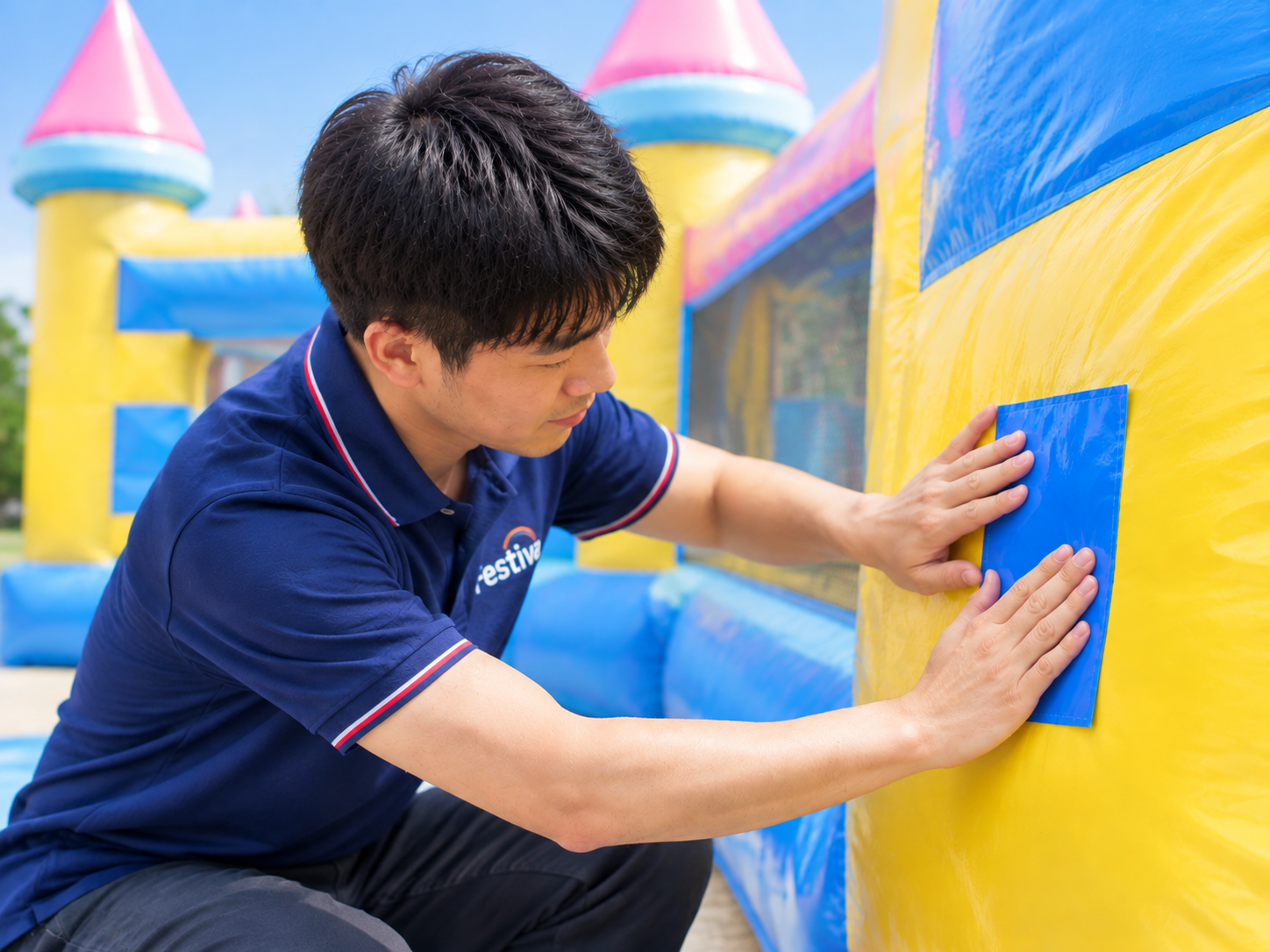
Clean and dry the affected area, apply a compatible PVC repair patch and adhesive according to the manufacturer’s instructions, and allow sufficient curing time before testing.
For large tears or extensive damage, professional repair is recommended.
2. Torn Seams: Check Stitching and Connections
Damaged seams should be inspected and repaired by a qualified inflatable repair professional.
Seams experience considerable stress during repeated inflation, jumping, and movement. Over time, stitching may loosen or the surrounding material may tear.
Inspect the seams around jumping surfaces, walls, corners, and slide connections. If you notice separated stitching or gaps, stop using the inflatable immediately.
Do not simply cover a structural seam with an ordinary adhesive patch. Seam repairs require appropriate materials and techniques to restore the original construction and strength. Follow the manufacturer’s repair instructions or contact a professional.
3. Damaged Zippers: Restore Proper Airflow
Check the zipper and its protective flap whenever an inflatable cannot maintain proper inflation.
Zippers are important components of many bounce houses because they provide access for deflation and maintenance.
Common problems include broken zipper teeth, damaged sliders, loose stitching, and stuck zippers. Remove dirt and debris from the zipper track first. Avoid forcing a stuck zipper, as this can cause further damage.
If the slider or zipper is broken, replacement may be necessary. Because zippers can also be part of the inflatable’s air-retention system, repairs should follow the manufacturer’s specifications.
4. Worn or Damaged PVC Material: Address Surface Damage Early
Repair small surface damage before it develops into a larger tear.
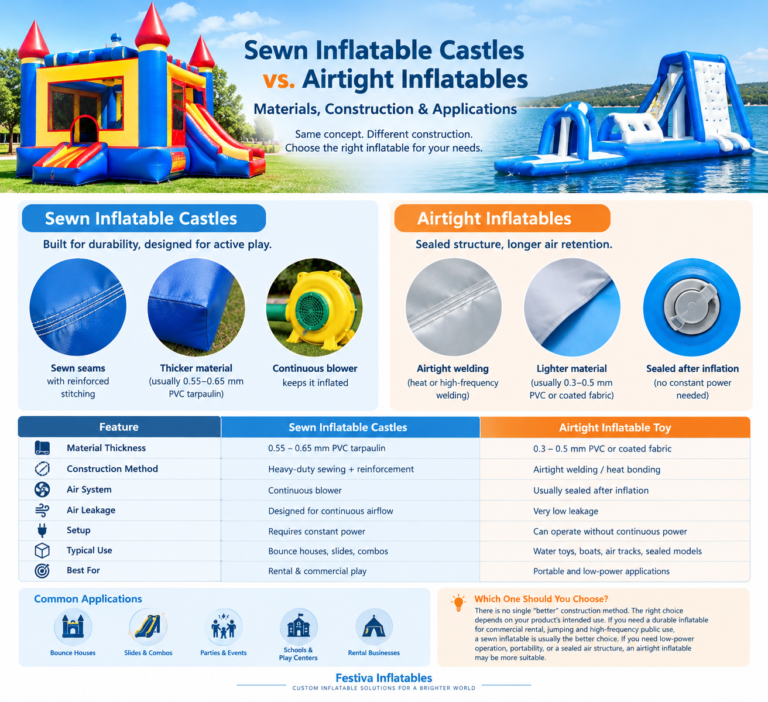
Commercial bounce houses are commonly manufactured using PVC-coated materials that are designed for repeated use. However, dragging equipment across rough surfaces, sharp objects, and excessive friction can damage the outer coating.
Clean the damaged area and inspect whether the problem affects only the surface or extends through the material. Small, non-structural punctures may be suitable for approved patch repairs.
If the damage affects a load-bearing area, jumping surface, or major connection, professional assessment is necessary before the inflatable is used again.
5. Blower Problems: Check the Air Supply
Inspect the blower, power connection, and air tube before assuming the inflatable itself is damaged.
A bounce house that looks underinflated may have an airflow problem rather than a leak.
Check whether the blower is operating normally, the power supply is stable, and the air tube is properly connected without kinks or blockages. Also inspect the air intake for dust or debris.
Always disconnect the power before inspecting electrical components. Never operate a damaged blower or attempt electrical repairs without qualified assistance.
If the blower overheats, makes unusual noises, or repeatedly shuts down, stop using it and have it inspected.
6. How to Prevent Future Bounce House Damage
Regular inspections and proper handling are the best ways to reduce repair costs.
Follow these maintenance practices to keep your inflatable equipment in good condition:
- Inspect the inflatable before and after every rental.
- Remove sharp objects and debris from the setup area.
- Use appropriate anchoring systems during operation.
- Avoid dragging the inflatable across rough surfaces.
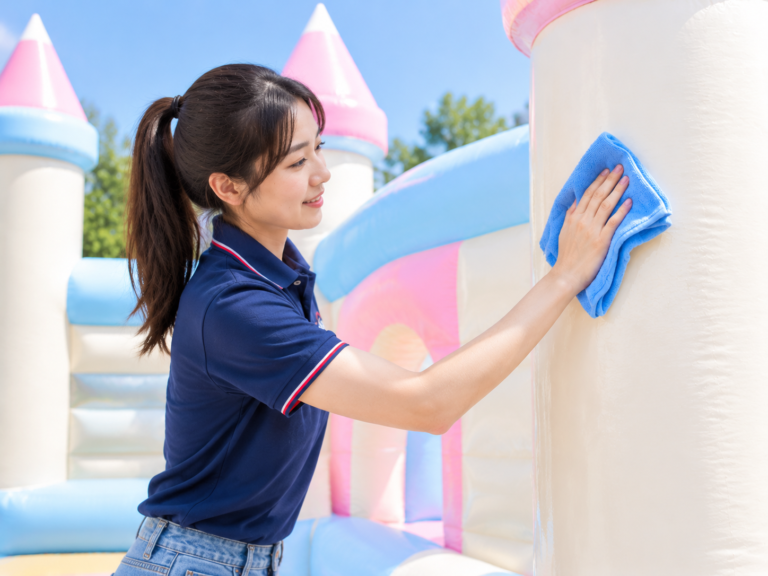
- Clean and completely dry the material before storage.
- Follow the manufacturer’s inflation, operation, and maintenance guidelines.
- Arrange professional inspections when structural damage is suspected.
Prevention is usually less expensive than repairing major damage or replacing an inflatable.
Frequently Asked Questions
1. Can you repair a hole in a bounce house?
Yes. Small holes in suitable PVC-coated vinyl may be repaired using manufacturer-approved patches and adhesives. Structural damage requires professional assessment.
2. Can duct tape fix an inflatable bounce house?
Duct tape is not a reliable permanent repair solution. It may lose adhesion and cannot restore the original strength of damaged material.
3. How long does a bounce house repair take?
Minor patch repairs may take a few hours, including adhesive curing time. Larger tears, seam damage, and replacement parts may require professional service and additional time.
4. When should you replace a bounce house instead of repairing it?
Consider replacement when the inflatable has extensive material deterioration, repeated structural failures, or damage that cannot be safely restored.
Choose Quality Inflatables for Long-Term Performance
Proper maintenance can extend the service life of inflatable equipment, but product quality and manufacturing techniques also matter.
At Festiva Inflatables, we specialize in custom commercial inflatables for rental companies, distributors, and event businesses worldwide. With 13 years of manufacturing experience, we provide OEM and ODM solutions for different commercial applications.
Whether you need commercial bounce houses, inflatable slides, or custom inflatable products, our team is ready to help you find the right solution for your business.
Contact Festiva Inflatables to discuss your next inflatable project. →
\ Get the latest news /